What Are the Main Steps for a Power Transmission Line Project?
What Is a Power Transmission Line Project?
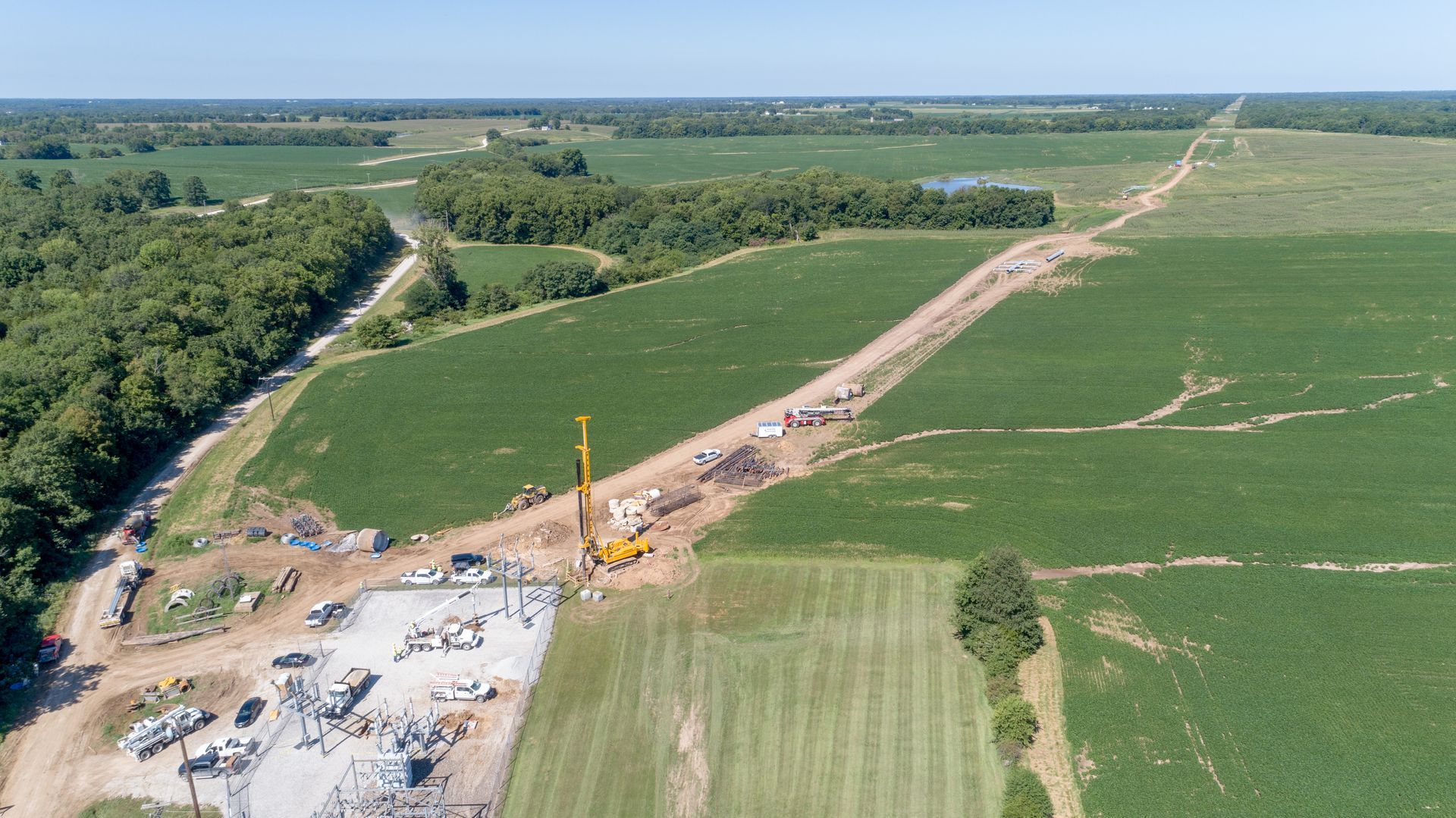
A power transmission line project involves designing and constructing infrastructure that transfers high-voltage electricity across long distances.
Transmission systems commonly include:
- Transmission structures and poles
- Conductors and shield wire
- Foundations
- Access roads
- Substations
- Utility interconnections
- Communication systems
Projects may support grid expansion, renewable integration, reliability improvements, or replacement of aging infrastructure, realized through overhead line construction and site-specific alternatives. Whether greenfield or rebuild, transmission line construction must adapt to environmental, technical, and community constraints.
Step 1: System Planning and Project Development
Utilities and developers evaluate long-term system needs to establish scope, schedule, and budget.
Early planning identifies:
- Growing energy demand and capacity constraints
- Grid reliability concerns
- Renewable energy integration needs
- Regional transmission requirements
This phase defines purpose and scope and frames the use of construction lines in design drawings for accurate, safe field layouts. Asking “what is the purpose of construction lines” helps teams ensure visual guides in plans precisely translate to field staking and clearances. Clarifying what is the purpose of construction lines also reinforces safety margins during construction of transmission lines.
Step 2: Route Selection and Corridor Evaluation
Determining the route balances technical, environmental, community, and cost factors.
Studies examine:
- Existing utility corridors and infrastructure
- Environmental impacts, wetlands, and waterways
- Property ownership and community impacts
- Topography and constructability concerns
Efficient early routing reduces risk and cost and streamlines construction, including specialty crossings. Good routing decisions directly influence how transmission line construction progresses in difficult terrain.
Step 3: Environmental Studies and Permitting
Projects require regulatory review and stakeholder coordination, including:
- Wetland and wildlife assessments
- Cultural resource investigations
- Vegetation, noise, and visual impact analyses
- Environmental impact studies and permits
Because lines may span multiple jurisdictions, approvals can become one of the longest phases.
Step 4: Land Acquisition and Easements
Teams work with landowners to obtain:
- Permanent easements
- Temporary construction access rights
- Road access agreements and utility crossings
Early communication helps minimize delays and improve coordination.
Step 5: Engineering and Detailed Design
Engineering develops plans for safe, efficient construction.
Structural Design
- Pole and structure selection
- Foundation design
- Wind and loading calculations
Civil Design
- Access roads, grading, and drainage
Electrical Design
- Conductor and insulation selection
- Grounding and protection systems
- Substation and utility interconnections
Construction lines in drawings guide precise layout, spacing, and clearances for safe overhead construction. Again, what is the purpose of construction lines? They serve as reference guides for alignment, height, and phase spacing that directly inform overhead line construction crews and quality checks during the construction of transmission lines.
Step 6: Site Preparation and Access Construction
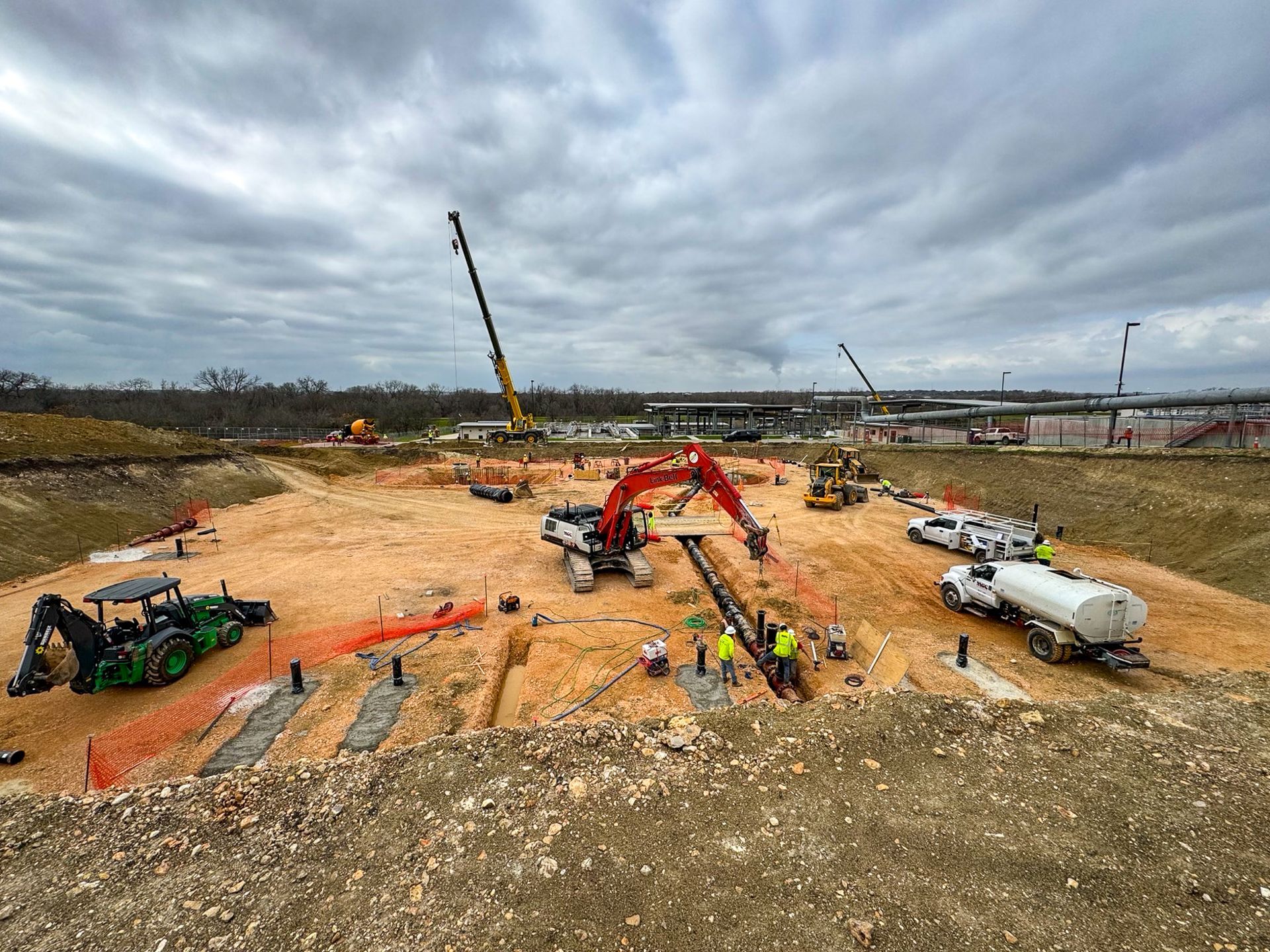
Before structure installation, crews prepare the corridor and access:
- Vegetation clearing and grading
- Temporary access roads
- Erosion control and stabilization
Access planning is crucial in difficult terrain or sensitive areas to maintain efficient transmission line construction sequencing.
Step 7: Foundation and Structure Installation
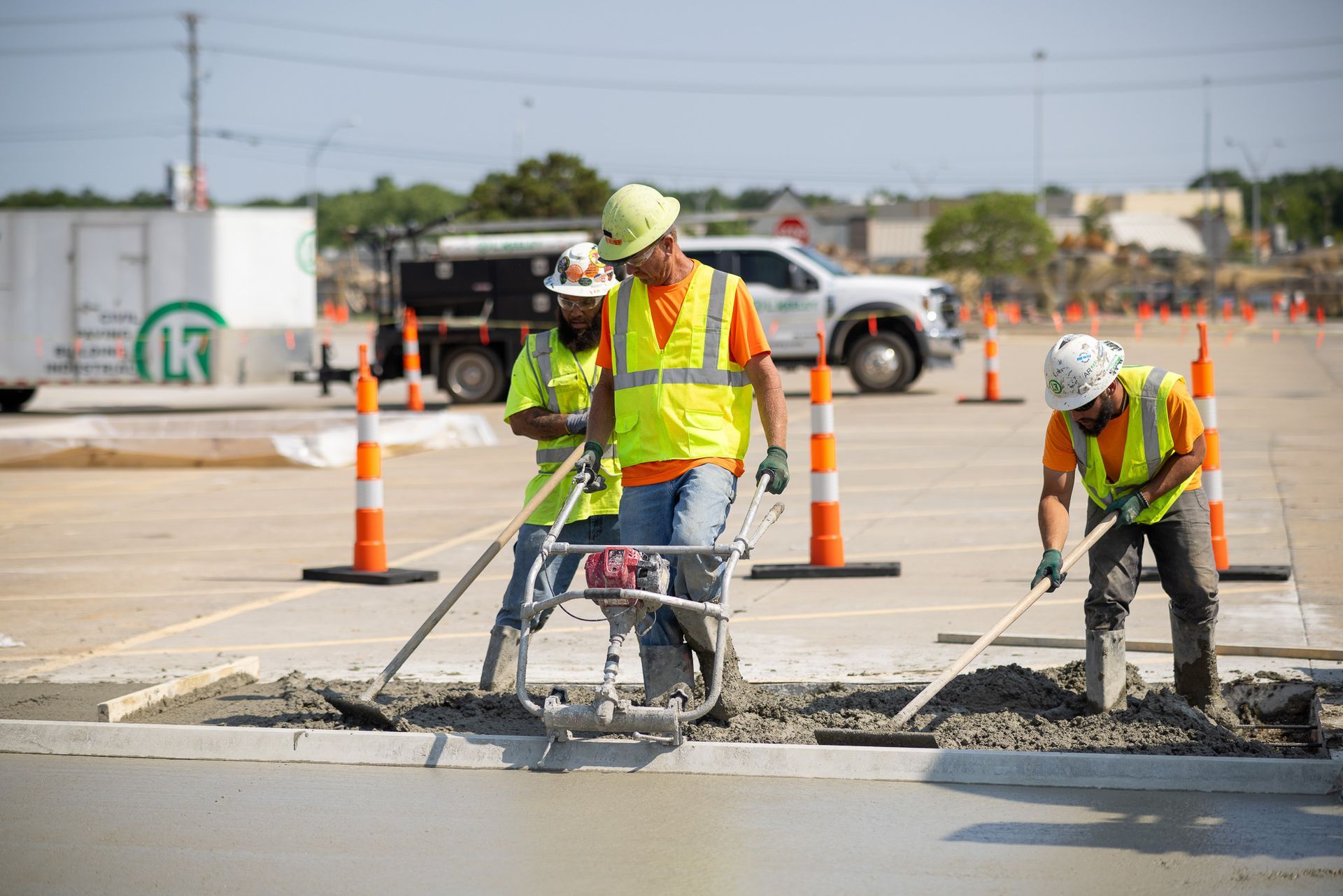
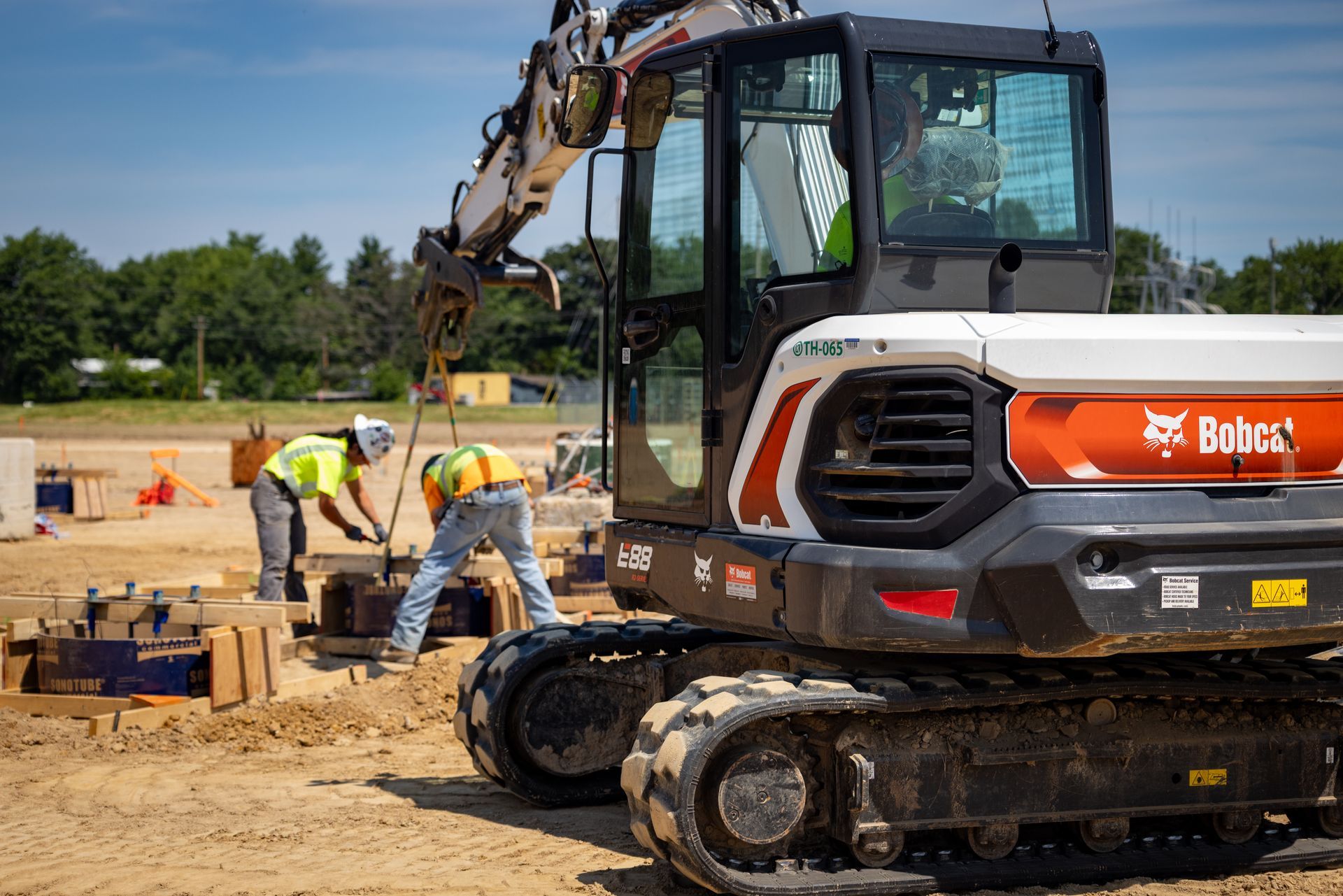
Crews install foundations such as drilled shafts, spread footings, piles, or concrete pads, then erect structures and poles. Structure types vary by voltage, terrain, and design requirements. This is a core phase in the construction of transmission lines, ensuring stability for long-term performance.
Step 8: Conductor Stringing and Electrical Work
With structures in place, teams install and tension conductors, add shield wire, complete grounding and communications, and perform utility tie-ins. Coordination and safety are critical over long spans, especially in overhead line construction near live systems or public roadways.
Step 9: Testing and Commissioning
Before service, teams complete electrical testing, grounding verification, structural inspections, utility coordination, and safety reviews to ensure safe operation and performance before energization. Final verification closes out the power transmission line project steps and documents readiness.
Common Questions Answered
What are the 7 stages of a construction project?
While frameworks vary, a common sequence is:
1) Initiation (system planning)
2) Feasibility and route selection
3) Environmental studies and permitting
4) Land acquisition
5) Engineering and detailed design
6) Construction (site prep, foundations, structures, stringing)
7) Testing, commissioning, and closeout
These map well to standard power transmission line project steps.
What are the 4 basic parameters of a transmission line?
The primary electrical parameters are resistance (R), inductance (L), capacitance (C), and conductance (G), which together define line impedance, charging, and performance.
What is a transmission line project?
It is the end-to-end effort to plan, permit, design, procure, construct, and commission high-voltage facilities that transmit power over long distances, typically integrating structures, conductors, substations, protection, communications, and access.
What is a T&D project?
T&D stands for Transmission and Distribution. A T&D project spans high-voltage transmission (bulk power movement) and medium/low-voltage distribution (delivery to end users), including lines, substations, feeders, switches, and related systems.
What are the 7 C’s of project management?
A practical set applied to transmission work includes: Clarity (objectives/scope), Consistency (standards/process), Communication (stakeholders), Collaboration (cross-teams), Coordination (schedules/interfaces), Control (cost/risk/quality), and Commitment (leadership/ownership).
Building the Future of Energy Infrastructure
Power transmission projects are increasingly important as grids evolve and renewable generation grows. While construction is highly visible, success begins with planning, coordination, and strategic decision-making.
Understanding the main phases—from initiation through commissioning—helps stakeholders chart a stronger path from concept to energization and deliver reliable, resilient infrastructure through thoughtful transmission line construction and efficient construction of transmission lines.