Comparing Port and Marine Construction Pile Driving Services
What Is a Pile Driving Contractor?
A pile driving contractor is a specialized foundation contractor who installs deep foundation elements—piles—into soil or rock to support structures. In marine settings, these firms use barges, cranes, and hammers to drive steel, concrete, timber, or sheet piles for docks, wharves, bulkheads, piers, bridges, and waterfront facilities.
What Services Do Pile Driving Contractors Provide?
Typical services include:
- Preconstruction planning, constructability reviews, and value engineering
- Geotechnical collaboration and test pile programs
- Installation of steel pipe, precast concrete, timber, and sheet piles
- Vibratory and impact driving, predrilling, and splicing
- Load testing and quality control/assurance documentation
- Environmental compliant pile driving, turbidity control, and species protection measures
- Related scopes such as bulkhead installation, marine earthwork, and structural concrete
Qualifications and Certifications to Look For
When comparing contractors, owners should evaluate more than equipment availability or pricing.
Look for:
- Marine construction experience: ports and terminals, waterfronts, and similar pile projects
- Specialized equipment: pile driving and crane barges, vibratory and impact hammers, marine platforms
- Self-perform capabilities for pile driving and related scopes
- Safety performance: documented marine safety programs, training, incident rates, and emergency response planning
- Environmental compliance expertise: permitting, water quality protections, turbidity controls, and protected species coordination
- Professional qualifications: licensed contractors, certified crane operators, welding certifications, safety certifications (e.g., OSHA, MSHA as applicable), and compliance with relevant maritime regulations
How Do Pile Driving Contractors Estimate Project Costs?
Estimating is based on a combination of engineering data and constructability factors.
Contractors typically consider:
- Geotechnical reports: soil profiles, required tip elevations, and anticipated driving resistance
- Pile type, size, and quantity: steel, precast concrete, timber, or sheet piles and associated fabrication costs
- Installation methods and production rates: vibratory vs. impact driving, predrilling, splicing, and testing
- Marine logistics: mobilization/demobilization of barges and cranes, access constraints, tides, currents, and weather windows
- Environmental requirements: turbidity barriers, monitoring, work windows, and mitigation measures
- Schedule and risk contingencies: allowances for subsurface variability, change in equipment, and standby due to conditions
What Is Marine Pile Driving?
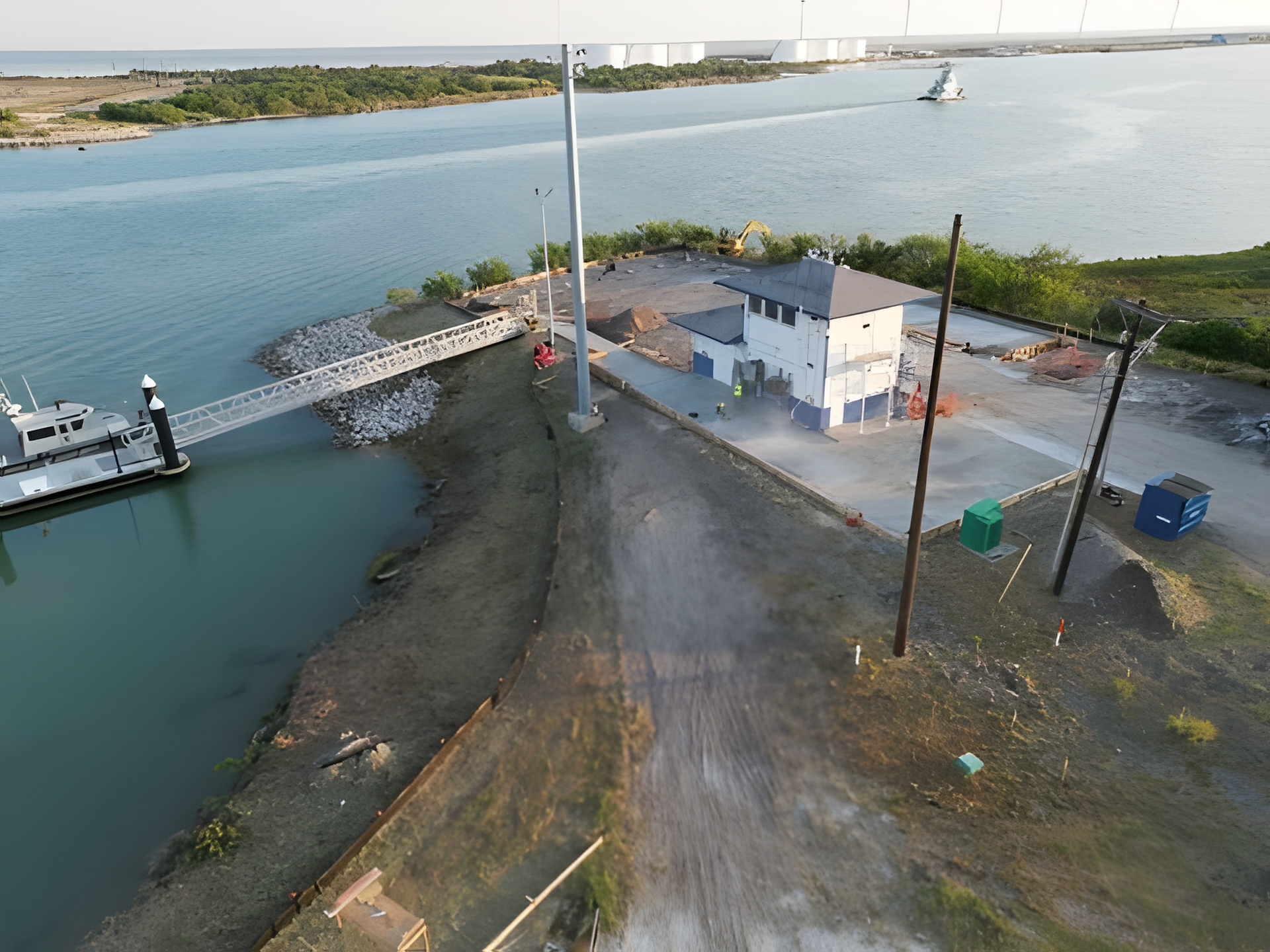
Marine pile driving is the process of installing deep foundation elements into underwater or shoreline soils to support marine structures. Commercial marine pile installation is performed using specialized rigs, barges, and hammers suited to water-based operations. Pile systems commonly support ports and terminals, docks and wharves, bulkheads and seawalls, ferry facilities, bridge structures, industrial waterfronts, cargo infrastructure, and river and harbor improvements. Depending on requirements, piles may be installed from land, barges, temporary platforms, or vessels.
Types of Piles Used in Marine Construction
Steel Pipe Piles
Common on port terminals and heavy industrial facilities, offering high load capacity and durability.
Concrete Piles
Precast piles for docks, piers, and waterfront structures provide corrosion resistance and long service life; concrete pile driving contractors bring the expertise needed.
Timber Piles
Used selectively for lighter-duty or rehabilitation work.
Sheet Piles
Installed for bulkheads, retention, shoreline protection, and excavation support to stabilize waterfront areas.
Key Evaluation Questions for Contractors
- What marine pile driving projects have you completed?
- What pile types and methods do you commonly install?
- Do you own and maintain your marine equipment?
- How do you plan and document environmental compliance?
- Can you self-perform related marine scopes to streamline delivery?
Building Strong Foundations for Marine Infrastructure
Ports, terminals, and waterfront facilities rely on durable foundations to support long-term operations. By assessing experience, specialized equipment, self-perform strengths, environmental and safety qualifications, and transparent cost estimating practices, owners can select marine pile driving contractors and concrete pile driving contractors committed to environmental compliant pile driving and reliable project delivery.