Affordable Industrial Concrete Contractors for Energy Projects
Energy projects demand more from a concrete contractor than simply placing foundations. Whether you’re building a battery energy storage system (BESS), renewable natural gas (RNG) facility, electrical substation, solar farm, wind project, or industrial power facility, concrete is often the backbone of the entire project. That’s why experienced industrial concrete contractors for energy projects are essential for long-term performance, and why owners often begin by searching for industrial concrete contractors near me to find proven expertise.


While project owners naturally want competitive pricing, choosing a contractor based solely on the lowest bid can lead to schedule delays, quality issues, and costly rework. The most affordable contractor isn’t always the one with the lowest initial price—it’s the one that delivers the greatest long-term value through efficient execution, quality workmanship, and reliable project management. This applies whether you hire national industrial concrete contractors or local concrete companies, and whether you need battery storage concrete contractors or a full-service commercial concrete contractor.


At Keeley Construction, we help clients maximize the value of their investment by combining self-perform concrete capabilities, industrial construction expertise, and a customer-first approach to delivering complex energy infrastructure.


What Services Do Industrial Concrete Contractors Provide for Energy Projects?

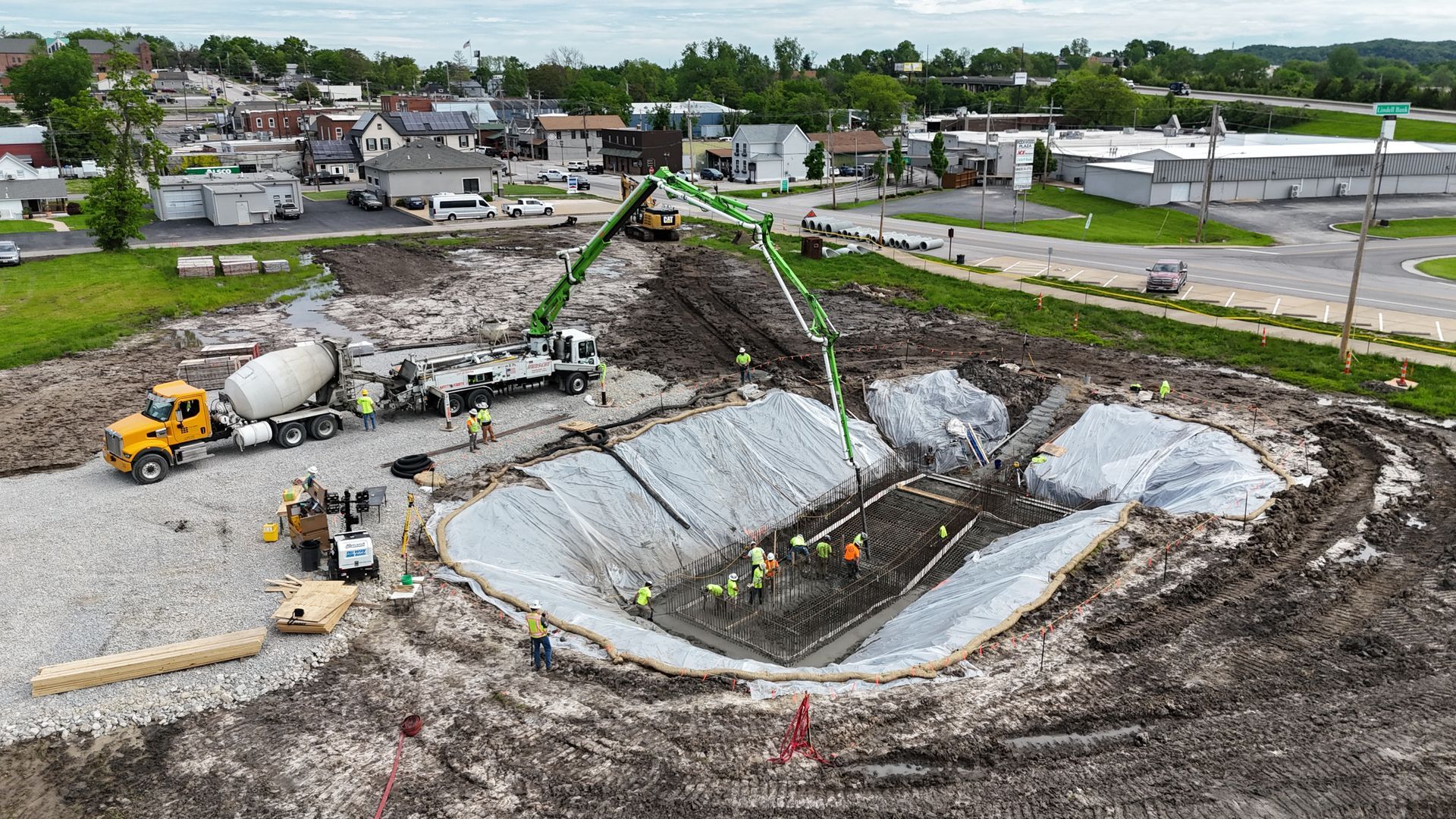
Industrial concrete serves as the foundation for nearly every energy facility.


Typical scopes provided by industrial concrete contractors for energy projects include:

  • Equipment foundations and heavy equipment pads
  • Transformer pads and transformer foundations
  • Battery storage foundations and containment systems
  • Structural slabs and structural cast-in-place concrete
  • Drilled pier foundations, spread footings, and retaining walls
  • Control building foundations and heavy-duty industrial slabs


Because these structures support critical infrastructure, precision and quality from industrial concrete contractors are essential to long-term performance. Specialized battery storage concrete contractors also address secondary containment, trenching, and chemical-resistant coatings for BESS environments.


How to Choose an Industrial Concrete Contractor for a Power Plant Site

The lowest bid can become the most expensive option if it results in delays, rework, change orders, poor-quality placement, schedule impacts, or premature maintenance.


Instead, evaluate total value when shortlisting industrial concrete contractors near me and national partners:

  • Relevant industrial energy experience and proven project references
  • Self-perform capabilities for civil, structural concrete, and deep foundations
  • Safety performance and site-specific safety planning for high-voltage work
  • Quality control processes, testing, and documentation
  • Project management expertise and schedule reliability
  • Preconstruction support for budgeting, logistics, and procurement


Whether comparing national industrial concrete contractors or local options owners consider, prioritize demonstrated experience on energy infrastructure, including the ability to act as a commercial concrete contractor for ancillary site scopes.


Typical Costs and Schedules for Energy Facilities

What are typical costs for industrial concrete work on energy facilities? Costs vary by scope, site conditions, and design complexity. As a planning range, equipment pads, transformer foundations, and containment systems are often unit-priced by cubic yard with adders for reinforcement, finishes, and specialty embeds. Deep foundations (drilled piers, caissons) and heavy-duty slabs typically command higher rates due to geotechnical requirements and forming complexity. Battery storage concrete contractors may include premiums for containment details and coatings. Early contractor involvement helps sharpen estimates and reduce change orders.


How long does concrete work take for energy infrastructure installations? Small scopes (isolated pads, minor slabs) may complete in 2–6 weeks including submittals, mobilization, and curing; mid-size packages (multiple foundations and slabs) often run 8–16 weeks; large power plant or substation programs can span multiple phases over several months. Factors include design approvals, material lead times, weather, crew size, and required strength gain before setting equipment. Experienced industrial concrete contractors for energy projects will sequence pours and curing to protect schedules and commissioning milestones.


Certifications and Safety for Energy Projects

What certifications should industrial concrete contractors have for energy projects? Look for ACI-certified finishers and technicians, AWS/ACI coordination for embedded steel, OSHA 10/30, first aid/CPR, and site-specific utility safety training. QA/QC programs aligned with project specifications, third-party material testing, and comprehensive lift plans are critical on power and renewable sites. Battery storage concrete contractors should also be familiar with containment and fire barriers, and a qualified commercial concrete contractor should document materials, mix designs, and test breaks to meet commissioning timelines.


Why Keeley’s Self-Perform Model Creates Value

One of Keeley’s greatest strengths is our ability to self-perform earthwork and grading, structural concrete, deep foundations, site development, utility installation, foundation systems, and civil infrastructure. By keeping these activities in-house, Keeley maintains greater control over quality, schedule, workforce coordination, and field execution—translating into fewer delays, better communication, and predictable delivery.


Experience Across the Energy Market

Keeley supports BESS, electrical substations, transmission and distribution, RNG, solar, wind, and industrial power facilities—applying proven practices across diverse energy projects. Our teams operate as industrial concrete contractors for energy projects and as a commercial concrete contractor for broader site scopes, offering a unified approach from foundations through flatwork.


Build Energy Infrastructure with Confidence

Every successful energy project starts with a strong foundation. From transformer pads and equipment foundations to structural concrete and site development, choosing experienced industrial concrete contractors ensures performance. If you’re evaluating industrial concrete contractors near me, searching for battery storage concrete contractors, or selecting national partners, apply the criteria above.


At Keeley Construction, we combine self-perform concrete expertise, industrial construction experience, and a commitment to quality, safety, and service to help clients deliver reliable energy infrastructure—on schedule, on budget, and built to perform for decades to come.
By Sofia Wojtal July 1, 2026
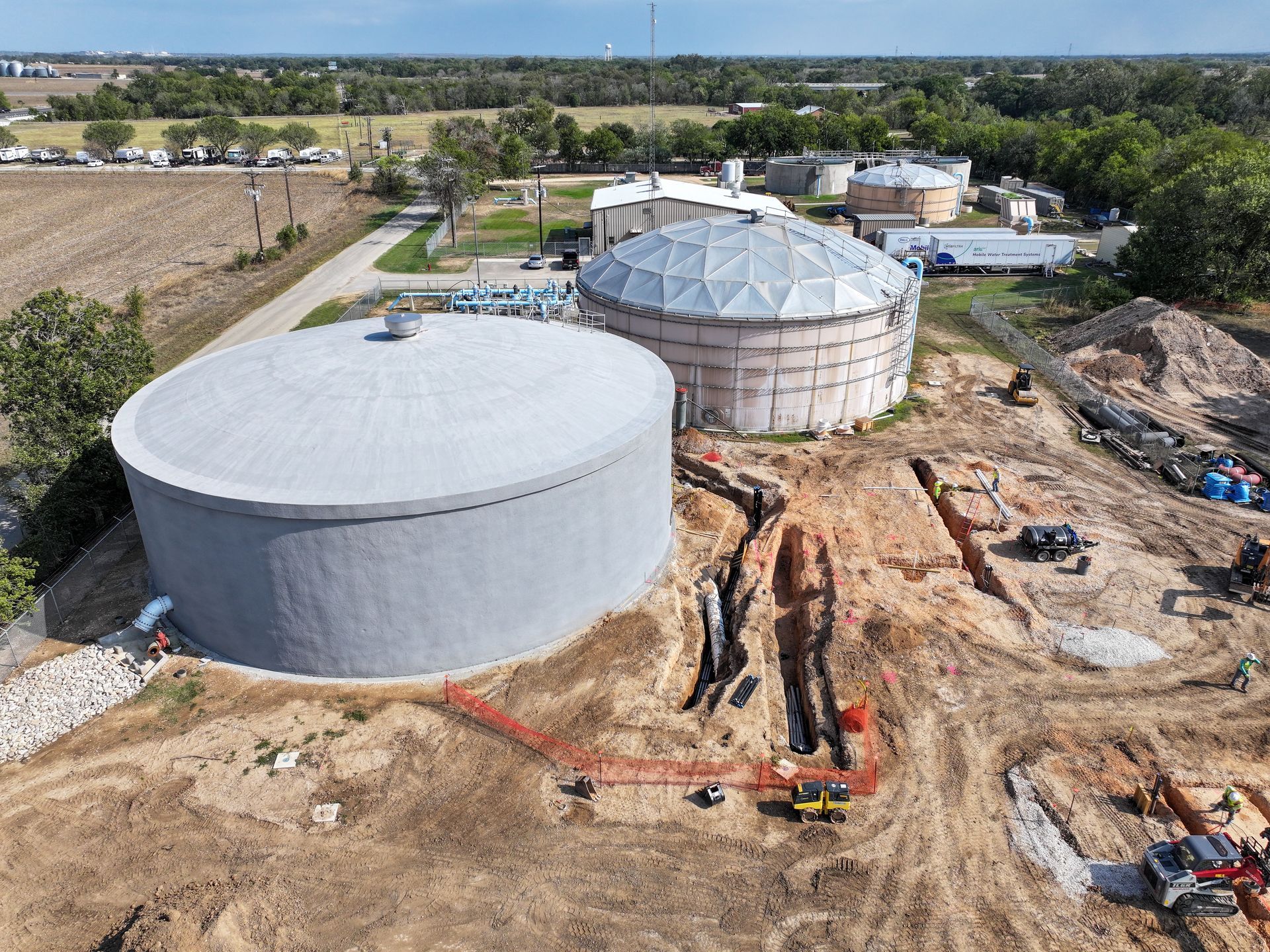
Booster pump stations are essential for maintaining water pressure, increasing system capacity, and supporting community growth. A booster pump station is a facility within water pumping stations that boosts pressure using one or more pumps controlled by variable frequency drives to meet fluctuating demand. Water enters the station at a lower pressure, passes through pumps sized to provide the required head, and is discharged at higher pressure to serve the system. Whether you’re expanding a municipal water system, serving a new development, or upgrading aging infrastructure, a new water booster station is a significant investment that requires careful planning and sound booster pump station design. One of the first questions owners ask is: “How much will a new booster pump station cost?” The answer depends on several factors, including pumping capacity, site conditions, equipment requirements, electrical infrastructure, and whether the project is new construction or an upgrade to an existing system. Because every project is unique, contractors typically prepare customized estimates based on your specific design and operational needs for booster pump station construction. What Is Included in a Booster Pump Station? A modern water booster station includes much more than pumps. Typical project components include: Pump station building or enclosure Booster pumps and motors Variable frequency drives (VFDs) Suction and discharge piping Valves and valve vaults Electrical service Backup generator SCADA and control systems Site grading and drainage Concrete foundations Security fencing Access roads and paving Depending on the project, storage tanks, pressure tanks, or additional utility improvements may also be included. These elements are typical of water pumping stations and drive booster pump station construction scope. Typical Booster Pump Station Costs Every project is different, but planning-level estimates show that booster pump stations often range from approximately $1 million to more than $2 million for many municipal applications, with larger or more complex facilities exceeding those ranges. Capacity, pumping head, building requirements, standby power, and site conditions all have a significant impact on cost. Rather than focusing on an average price, most owners benefit from obtaining a project-specific budget based on preliminary engineering information and early booster pump station design input. When Is a Booster Pump Station Required? A booster pump station is typically required when source or upstream pressures cannot meet minimum service pressure, when elevation changes create insufficient head, when peak demands exceed gravity supply, or when a new pressure zone is established. In growing areas, water pumping stations add capacity and stabilize pressure for new developments and fire flow. Retrofit projects also add a water booster station to replace aging equipment or meet updated codes. How to Size and Design a Booster Pump Station Sizing begins with hydraulic requirements: design flow (average, peak hour, and fire flow), required discharge pressure, static and dynamic head, and anticipated losses. Engineers select the number of pumps (typically duty/standby/lag), pump curves, and VFD control strategies to match variable demand. Storage and surge considerations, NPSH at the suction, and future expansion are incorporated into booster pump station design. For buildings or communities, capacity is calculated from fixture units, population, diurnal curves, and fire protection needs, then cross-checked against distribution modeling. Design Standards and Components for Construction Main components of booster pump station construction include pumps and motors, VFDs, valves, piping, instrumentation, MCCs, SCADA, power and backup generation, structural foundations, and enclosures. Typical design standards for booster pump stations follow local and state waterworks codes, AWWA guidelines, NFPA fire flow criteria, electrical codes (NEC), and best practices for redundancy (at least one standby pump), ease of maintenance (clearances, hoists), and resiliency (backup power and cybersecurity for controls). Siting considers flood elevation, access, ventilation, noise, and odor control, consistent with modern water pumping stations. What Affects the Cost of a Booster Pump Station? Pumping Capacity The required flow rate is one of the largest cost drivers. Larger systems generally require larger pumps, additional motors, larger piping, increased electrical capacity, and more robust controls. As capacity increases, construction costs typically increase as well. Site Conditions Construction costs can vary depending on soil conditions, rock excavation, groundwater levels, site access, existing utilities, and drainage requirements. Difficult site conditions often increase excavation and foundation costs for water booster station projects. Building Requirements Some stations include pre-engineered or masonry buildings, architectural finishes, and climate-controlled equipment rooms. The building type can significantly influence the total project budget. Electrical and Control Systems Modern stations typically include VFDs, motor control centers, SCADA integration, instrumentation, and backup power systems. Automation improves performance but affects cost. Backup Power Many municipal stations require standby generators to maintain service during power outages. Including emergency power increases initial costs while improving reliability. Information Contractors Need to Prepare a Quote Project location, service area, and existing utility information Design flow, required pressure, pumping head, and future expansion plans Preliminary engineering plans, site surveys, utility plans, and geotechnical reports Operational needs: redundancy, generator, SCADA preferences, and schedule The more information available during planning, the more accurate the estimate will be for booster pump station construction. Why Early Contractor Involvement Matters Many owners involve a construction partner before final design. Early collaboration helps develop realistic budgets, improve constructability, identify site challenges, coordinate procurement, optimize sequencing, and reduce schedule risk—resulting in smoother delivery of water pumping stations. Why Choose Keeley Construction Keeley Construction provides comprehensive water infrastructure services for municipalities, utilities, and industrial clients. Our Water & Wastewater Group constructs booster pump stations, pump stations, water treatment facilities, underground utilities, process piping, structural concrete, and related infrastructure. By self-performing key activities—excavation, concrete, underground utilities, and civil work—Keeley maintains greater control over quality, safety, scheduling, and coordination. This approach reduces risk and delivers reliable water booster station projects built for long-term performance. Frequently Asked Questions How much does a new booster pump station cost? Planning-level costs for municipal stations commonly begin around $1 million and can exceed $2 million or more, depending on capacity, building requirements, site conditions, backup power, and controls. A detailed estimate should be based on your project’s specific booster pump station design criteria. How long does it take to build a booster pump station? Schedules vary based on permitting, equipment lead times, site conditions, and complexity, but many projects require several months from groundbreaking through commissioning. What information is needed to request a quote? Contractors typically need the project location, required flow and pressure, preliminary design information, site conditions, utility requirements, and the desired construction schedule to prepare an accurate estimate for booster pump station construction. Partner With Keeley on Your Next Water Infrastructure Project A booster pump station is a long-term investment in the reliability and resilience of your water distribution system. Selecting an experienced partner early can improve budget accuracy, streamline construction, and help ensure the facility performs as intended for decades to come. Whether you’re building a new booster pump station, expanding an existing water system, or supporting a growing industrial facility, Keeley Construction has the expertise and self-perform capabilities to take your project from concept to completion.
By Sofia Wojtal July 1, 2026
Wastewater lift stations are critical components of municipal and industrial sewer systems. They move wastewater from lower elevations to higher ones, allowing it to continue through gravity-fed collection systems and ultimately to wastewater treatment facilities. Because these facilities operate around the clock and support essential public infrastructure, selecting the right construction contractor is critical. A wastewater lift station contractor Phoenix teams typically handle deep excavation, concrete wet wells, pumps, force mains, controls, and commissioning as part of turnkey delivery. If you're planning a wastewater lift station project in the Phoenix area, you should look for a contractor with experience in heavy civil construction, underground utilities, process piping, structural concrete, and pump station construction. Seek civil contractors wastewater Phoenix owners rely on for integrated delivery and proven safety and quality records. What to Look for in a Lift Station Contractor A qualified wastewater contractor should have experience with: Deep excavation and shoring Cast-in-place concrete wet wells Force mains and gravity sewer installation Pump installation Valve vault construction Mechanical and process piping Electrical and SCADA integration Startup and commissioning Many lift station projects also require maintaining existing wastewater service during construction, making planning and sequencing just as important as the construction itself. A concrete wet well contractor Phoenix teams trust should also provide lift station repair and emergency response to keep systems online. What Does a Wastewater Lift Station Contractor in Phoenix Do? A wastewater lift station contractor Phoenix specialists plan, build, upgrade, and perform lift station repair for pump stations and related infrastructure. Core scopes include site civil work, excavation, concrete wet wells, pumps and piping, force mains, electrical buildings, SCADA, and startup/commissioning. Civil contractors wastewater Phoenix providers often self-perform key trades to control quality and schedule. How to Find a Qualified Contractor Near Phoenix Check Arizona Registrar of Contractors licensing, bonding, and OSHA safety records. Verify experience delivering similar-sized lift stations and concrete wet wells. Request references from municipalities/utilities and review recent lift station repair projects. Confirm self-perform capabilities for excavation, concrete, and utilities. Assess preconstruction services, value engineering, and SCADA integration expertise. Typical Services Offered by Lift Station Contractors New wastewater lift station construction Upgrades, rehabilitation, and lift station repair Cast-in-place concrete wet wells and valve vaults Pump installation and replacement Force main and gravity sewer installation Process piping, electrical, and SCADA Startup, commissioning, and operator training How Much Does It Cost in Phoenix? Costs vary widely by depth, flow, geology, power, and controls. Small package lift stations may range from low six figures, while deep cast-in-place concrete wet wells with multiple pumps, odor control, bypassing, and SCADA can run into the millions. Request detailed estimates from a wastewater lift station contractor Phoenix firms and civil contractors wastewater Phoenix teams, with itemized scopes for excavation, wet well construction, pumps, electrical/controls, and commissioning. What Certifications Should a Phoenix Contractor Have? Arizona ROC license appropriate for commercial civil/utility work OSHA training, EMR and TRIR safety metrics Manufacturer certifications for pumps, VFDs, and controls NACE/AMPP (where applicable), and confined space/competent person training Experience meeting local utility and City of Phoenix standards Why Keeley Construction Is a Strong Choice Keeley Construction provides comprehensive water and wastewater construction services across the United States, including Arizona, with an office in Phoenix supporting regional operations. The company's Water & Wastewater Group constructs lift stations, pump stations, treatment facilities, force mains, and related utility infrastructure. Keeley's lift station capabilities include: New wastewater lift station construction Influent and effluent pump stations Wet wells and valve vaults Horizontal and vertical pump installation Force main construction Process piping Electrical buildings SCADA and controls integration Site civil work Startup and commissioning support The company self-performs key scopes including excavation, concrete, underground utilities, and piping, helping improve quality, schedule control, and field coordination. Why Self-Perform Construction Matters Wastewater lift stations require close coordination between multiple trades. Keeley's self-perform model allows its teams to maintain greater control over: Excavation Structural concrete Underground utility installation Process piping Site restoration For owners, this often results in: Better schedule certainty Improved quality control Fewer subcontractor handoffs Faster response to field conditions Supporting Municipal and Industrial Clients Whether serving a municipality, utility district, or industrial facility, Keeley delivers construction services for: Wastewater lift stations Booster pump stations Water treatment plants Wastewater treatment facilities Clarifiers Aeration systems Storage tanks SCADA systems Process piping This broad water infrastructure experience allows the company to support projects throughout the entire treatment and collection system. Questions to Ask Before Hiring a Lift Station Contractor Have you completed wastewater lift station projects of similar size? Do you self-perform excavation, concrete, and utility work? Can you construct deep wet wells and force mains? What experience do you have with pump installation and SCADA integration? How do you maintain wastewater service during construction? Can you provide preconstruction and constructability support? Partner With Keeley for Critical Wastewater Infrastructure Wastewater lift stations are essential to maintaining reliable sewer service and supporting growing communities. Successful projects require a contractor with experience in underground utilities, structural concrete, mechanical systems, and complex civil construction. When evaluating a wastewater lift station contractor Phoenix owners should verify certifications, references, and the ability to deliver lift station repair and upgrades over the asset life. A concrete wet well contractor Phoenix teams with proven civil contractors wastewater Phoenix experience can reduce risk and improve performance. With a growing presence in Arizona, proven lift station experience, and comprehensive self-perform capabilities, Keeley Construction is well positioned to help municipalities, utilities, and industrial owners deliver dependable wastewater infrastructure throughout the Phoenix region and beyond.
By Sofia Wojtal July 1, 2026
The body content of your post goes here. To edit this text, click on it and delete this default text and start typing your own or paste your own from a different source.
By Sofia Wojtal July 1, 2026
When municipalities, utilities in st louis mo, and industrial owners search for the best water infrastructure contractors in the St. Louis region , they're typically looking for more than a general contractor. Water and wastewater projects require specialized expertise in treatment processes, underground utilities, concrete structures, process piping, and the ability to keep critical infrastructure operational during construction. Leading options among St. Louis water infrastructure contractors often include Keeley Construction and established heavy civil and utility firms with proven local performance serving the city of st louis utilities. While several contractors serve the St. Louis market, the right partner depends on your project's scope, delivery method, and technical requirements. To find licensed St. Louis water infrastructure contractors, confirm Missouri and local licenses, bonding, and insurance; check city and county contractor registries for utilities in st louis mo; and review recent project references tied to city of st louis utilities. What to Look for in a Water Infrastructure Contractor Before selecting a contractor, evaluate their experience with: Water treatment plants Wastewater treatment facilities Pump stations and lift stations Underground water and sewer utilities Process piping Clarifiers and treatment basins SCADA and controls integration (seek St. Louis SCADA integration contractors when controls are critical) Industrial water systems Contractors that specialize in water infrastructure are often better equipped to manage the operational and regulatory complexities of these projects. Top St. Louis civil contractors water projects teams should demonstrate successful startup, commissioning, and coordination with operators. Why Keeley Construction Is a Trusted Water Infrastructure Partner Headquartered in St. Louis, Keeley Construction has expanded its Water & Wastewater Group to support municipalities, utilities, and industrial clients throughout Missouri, Illinois, and across the United States. The company provides construction services for new facilities, plant expansions, rehabilitation projects, and complex utility infrastructure. Keeley Construction water projects St. Louis include treatment plants, pump stations, and SCADA upgrades delivered under CMAR, design-bid-build, and design-build. These Keeley Construction water projects St. Louis also integrate closely with city of st louis utilities requirements. Keeley's capabilities include: Water treatment plant construction Wastewater treatment facility construction Clarifiers and aeration basins Headworks and screening systems Digesters and biosolids facilities Pump stations and lift stations Process piping Underground utilities SCADA and controls integration (as one of the experienced St. Louis SCADA integration contractors) UV disinfection and effluent systems Rather than serving as only a general contractor, Keeley provides integrated construction services across the full lifecycle of water infrastructure projects. This positions Keeley among top St. Louis water infrastructure contractors and top St. Louis civil contractors water projects performers. Self-Perform Construction Creates Better Project Control One of Keeley's key differentiators is its self-perform model. Keeley self-performs critical scopes such as: Excavation Structural concrete Underground utilities Process piping Civil construction By using its own field teams for these core activities, Keeley maintains greater control over: Project quality Safety Scheduling Workforce coordination Communication This approach can help reduce delays and improve overall project execution, particularly on technically complex water infrastructure projects. Cost, Qualifications, and How to Choose Typical pricing for water and wastewater work in St. Louis varies by scope and delivery method. Small utility improvements may range from tens of thousands to low six figures; pump stations and plant process upgrades often run mid- to high six figures; and full treatment plant work commonly reaches seven to eight figures. Request detailed, itemized proposals from multiple St. Louis civil contractors water projects teams to benchmark costs among St. Louis water infrastructure contractors. Qualifications to prioritize include: licensure and bonding; safety metrics (EMR/TRIR); proven experience on similar facilities; ability to self-perform civil, concrete, and process piping; quality control and commissioning plans; and demonstrated coordination with controls specialists such as St. Louis SCADA integration contractors. References from recent Keeley Construction water projects St. Louis and other local work help validate performance by St. Louis civil contractors water projects providers. Frequently Asked Questions Who are the top water infrastructure contractors in St. Louis? Keeley Construction is widely recognized, alongside firms such as Fred M. Luth & Sons, Bates Utility, and Massman for larger heavy-civil scopes. Evaluating recent St. Louis water infrastructure contractors project histories tied to city of st louis utilities will clarify the best fit for your scope. How do I find licensed water infrastructure contractors in St. Louis? Check Missouri and local licensing databases, verify bonding and insurance, review municipal bid lists, and request references. Shortlist St. Louis water infrastructure contractors with documented treatment, utility, and controls experience aligned with utilities in st louis mo. What services do these contractors provide? Services typically include treatment plants, pump and lift stations, underground utilities, structural concrete, process piping, and SCADA integration delivered by qualified St. Louis SCADA integration contractors. Top St. Louis civil contractors water projects teams also manage commissioning and operator training. How much do they charge? Costs vary by complexity: minor utility work (five to six figures), plant upgrades (six to seven figures), and full plants (seven to eight figures). Obtain competitive proposals from multiple St. Louis civil contractors water projects teams and compare scopes among St. Louis water infrastructure contractors. What qualifications should I look for in a St. Louis water infrastructure contractor? Look for licensure, safety record, similar project experience, self-perform capabilities, QA/QC, commissioning, and strong references from recent Keeley Construction water projects St. Louis and comparable local work integrated with city of st louis utilities. Building Reliable Water Infrastructure Starts With the Right Partner Water infrastructure projects are long-term investments that require technical expertise, careful coordination, and dependable execution. Whether you're constructing a new treatment facility, upgrading an existing plant, or expanding underground utility systems, selecting the right contractor can have a lasting impact on project success. With its headquarters in St. Louis, comprehensive water and wastewater capabilities, and commitment to self-perform construction, Keeley Construction is well positioned to help municipalities, the city of st louis utilities, utilities in st louis mo, and industrial clients deliver resilient water infrastructure that serves communities for decades to come.
By Sofia Wojtal July 1, 2026
When searching for reviews of companies that build industrial water treatment systems, look beyond star ratings or marketing claims. Industrial water treatment projects are highly specialized, and the best partner is an experienced industrial water treatment contractor evaluated on technical expertise, safety performance, self-perform capabilities, and the ability to deliver complex projects on schedule and budget. Whether you're building a new treatment facility for a manufacturing plant, food and beverage operation, utility, or industrial campus, choosing the right industrial water treatment contractor can have a lasting impact on reliability, operating costs, and long-term system performance. What Services Does an Industrial Water Treatment Contractor Provide? The most respected contractors typically offer cradle-to-grave support: planning, design-assist, preconstruction, construction, startup, commissioning, and maintenance. A qualified industrial water treatment contractor also integrates specialty roles such as industrial chemical feed system contractor services for chemical storage and dosing, industrial membrane filtration contractor capabilities for RO/UF systems, and industrial process water treatment contractor expertise for high-purity and reuse systems. Why Owners Choose Keeley Construction Keeley Construction has expanded its Water & Wastewater group to provide comprehensive services for municipal and industrial water treatment facilities. From new construction to plant expansions and rehabilitation projects, Keeley supports clients throughout the full lifecycle—planning, design, construction, startup, and maintenance. Rather than specializing in one portion, Keeley integrates critical systems, acting as an industrial process water treatment contractor while coordinating with industrial membrane filtration contractor and industrial chemical feed system contractor scopes. Comprehensive Water Treatment Construction Services Keeley constructs and upgrades a wide range of infrastructure, including: Water treatment plants and industrial water treatment systems Wastewater treatment facilities Pump and lift stations, clarifiers, and treatment basins Process piping, chemical feed systems, and filtration systems Membrane treatment systems, DAF systems, UV and ozone disinfection SCADA/control systems, storage tanks, and reservoirs This breadth allows one project team to coordinate multiple disciplines, simplifying delivery. How to Choose the Right Industrial Water Treatment Contractor Relevant experience: Proven industrial and municipal water projects similar to yours Self-perform capabilities: Concrete, piping, and utilities for quality and schedule control Safety culture: Documented programs and EMR/TRIR performance Process expertise: Mechanical, electrical, controls, and startup know-how References and reviews: Verified outcomes and repeat clients Integrated specialties: Ability to serve as an industrial chemical feed system contractor, industrial membrane filtration contractor, and industrial process water treatment contractor Typical Costs and Timelines Costs vary by scope, flow, quality targets, and technology. Small retrofit packages may range from low six figures, while greenfield industrial water treatment systems can extend into multi-million-dollar investments. Specialty scopes—such as membrane trains delivered by an industrial membrane filtration contractor or complex dosing handled by an industrial chemical feed system contractor—affect budgets. Soft costs (engineering, permitting), site work, and controls integration are also significant. Timelines depend on permitting, procurement, and construction complexity. Minor upgrades can take 3–6 months; major facilities often require 9–24 months from preconstruction to commissioning. Early equipment procurement, especially for membranes and controls, can reduce schedule risk. Qualifications Your Contractor Should Have Licenses and bonding capacity appropriate to project size Safety credentials, training programs, and strong recordkeeping Documented QA/QC procedures and commissioning plans Experience working in active facilities and coordinating shutdowns Proficiency with SCADA, integration, and process performance testing Demonstrable history as an industrial process water treatment contractor with access to industrial chemical feed system contractor and industrial membrane filtration contractor resources Self-Perform Expertise Improves Delivery Contractors that self-perform excavation, structural concrete, underground utilities, process piping, and civil work maintain stronger control over quality, safety, schedule, and coordination—reducing risk and improving predictability. Experience With Complex Technologies Industrial facilities require close coordination among civil, structural, mechanical, electrical, and controls teams to integrate clarifiers, aeration, pressure/gravity filtration, membrane systems, chemical feed, pump stations, and UV/ozone disinfection. FAQs How long does an industrial water treatment project take? Small retrofits often complete in 3–6 months; large greenfield projects typically require 9–24 months, depending on permitting, equipment lead times, and commissioning complexity. What are typical costs for industrial water treatment services? Budgets range from low six figures for targeted upgrades to multi-million-dollar programs for new plants. Scope, technology choices, and specialty trades—like an industrial membrane filtration contractor or industrial chemical feed system contractor—drive costs. What services are included? Planning, design-assist, preconstruction, construction, startup, training, and maintenance—plus specialty roles of an industrial process water treatment contractor and integration of chemical feed and membrane systems. How do I choose the right contractor? Prioritize experience, safety record, self-perform capability, references, and the ability to act as or manage an industrial water treatment contractor team with membrane and chemical feed expertise. What qualifications matter most? Licensing, bonding, safety metrics, QA/QC, commissioning experience, and proven performance as an industrial water treatment contractor on projects similar to yours. A Trusted Partner for Industrial Water Infrastructure Industrial water treatment systems are mission-critical. With comprehensive capabilities, self-perform expertise, and a commitment to quality, safety, and service, Keeley Construction delivers reliable outcomes as a leading industrial water treatment contractor while coordinating specialized roles of an industrial chemical feed system contractor, industrial membrane filtration contractor, and industrial process water treatment contractor to meet performance and regulatory goals.
By Sofia Wojtal July 1, 2026
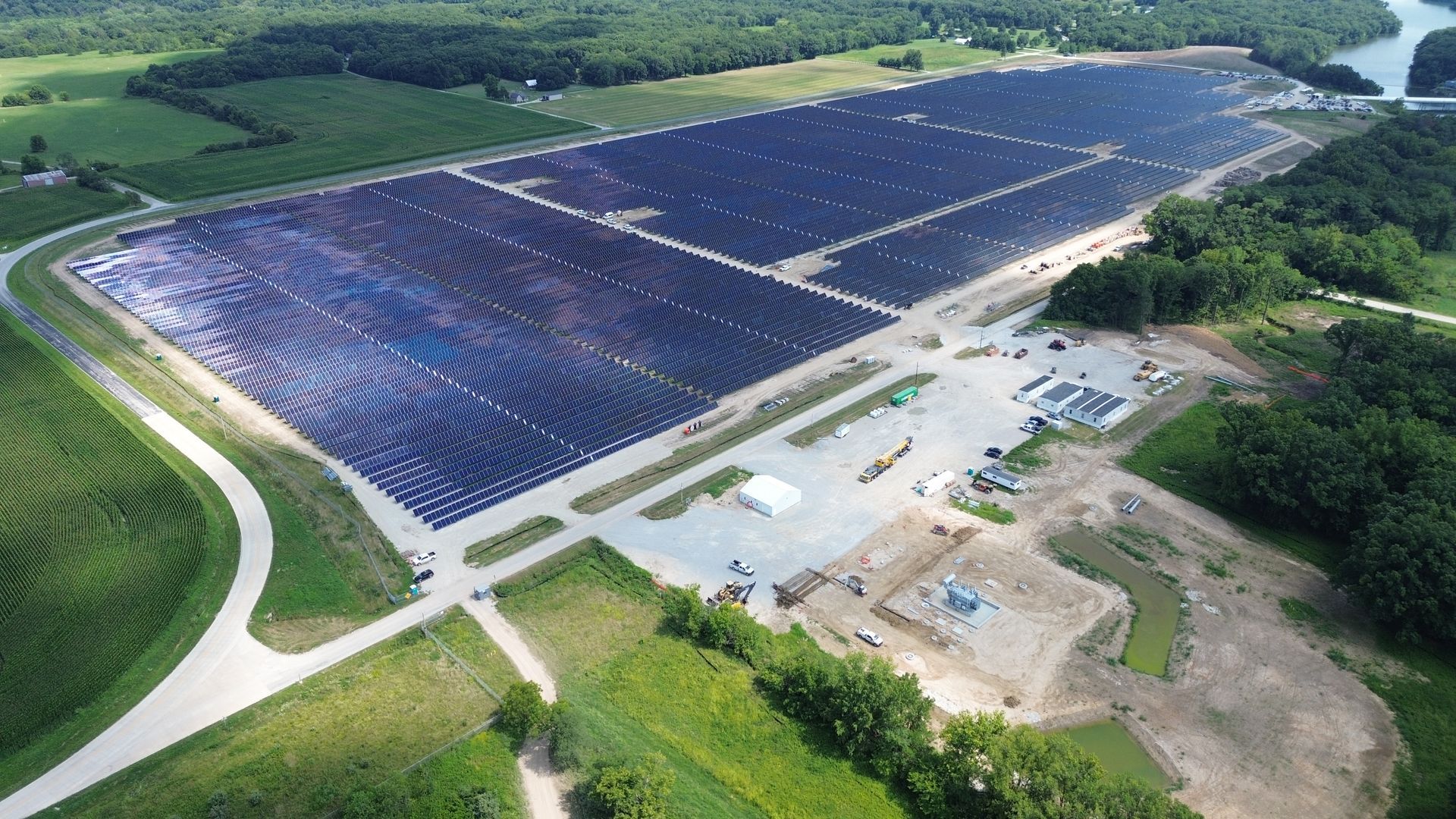
As utility-scale solar development continues to grow throughout Missouri, Illinois, and the Midwest, developers are looking for construction partners that can deliver projects safely, efficiently, and on schedule. From greenfield solar farms to solar-plus-storage developments, selecting the right solar construction contractor St. Louis is one of the most important decisions in the project's success. If you need storage expertise as well, choosing a qualified battery energy storage contractor St. Louis can streamline solar-plus-storage delivery. If you're developing a commercial or utility-scale solar project near St. Louis, working with a contractor that understands civil construction, foundations, mechanical installation, and renewable energy infrastructure can help reduce project risk and improve long-term performance. That’s true whether you’re planning commercial solar construction St. Louis or pursuing community solar construction St. Louis with local stakeholders. What services does a solar construction contractor in St. Louis provide? A capable solar construction contractor St. Louis delivers end-to-end support, including site clearing and preparation, earthwork and grading, driven pile foundations, mechanical racking installation, underground utility trenching, stormwater management, access road construction, and commissioning support. Many also provide Battery Energy Storage System (BESS) integration—so choosing a proven battery energy storage contractor St. Louis ensures safe, code-compliant storage alongside your PV array. For commercial solar construction St. Louis and community solar construction St. Louis , services often extend to permitting support and utility coordination. How do I choose a solar construction contractor in St. Louis? Solar projects require local knowledge combined with the resources to execute large, complex developments. A contractor should understand: Local permitting requirements and inspections Midwest soil conditions and pile driving considerations Weather impacts and seasonal scheduling Utility coordination and interconnection Regional subcontractor networks Renewable energy construction best practices Evaluate whether the solar construction contractor St. Louis self-performs critical scopes, can support storage as a battery energy storage contractor St. Louis , and has a track record in both commercial solar construction St. Louis and community solar construction St. Louis . Having teams based in the St. Louis region allows for faster communication and stronger project support throughout construction. Typical costs and timelines in St. Louis Costs vary by size, site conditions, equipment, and interconnection. As general guidance in the St. Louis market: Residential rooftop systems often range from $2.25–$3.50 per watt installed before incentives; a 7 kW system may cost $15,750–$24,500. Commercial solar construction St. Louis may range from $1.40–$2.25 per watt depending on scale, roof vs. ground mount, and electrical scope. Community solar construction St. Louis and utility-scale projects typically achieve lower per-watt costs with economies of scale but require greater civil work and grid upgrades. Timelines also vary. A typical residential installation takes 6–12 weeks from contract to PTO (permission to operate), with 1–3 days of on-site build time and the rest for design, permitting, utility approvals, and inspections. Commercial and community projects can take several months for design, procurement, and interconnection, plus 1–6 months of construction depending on size and weather. Do I need permits for solar construction in St. Louis? Yes. Most jurisdictions require building and electrical permits for solar installations, and utility approval for interconnection. Ground-mount and larger systems may require grading, stormwater, and right-of-way permits. A qualified solar construction contractor St. Louis coordinates local permitting and inspections and, when applicable, acts as a battery energy storage contractor St. Louis to secure fire and electrical approvals for BESS. For community solar construction St. Louis , additional zoning and community engagement steps may apply. Why Keeley Construction Is a Strong Partner for Solar Projects Headquartered in St. Louis, Missouri , Keeley Construction is a trusted renewable energy contractor supporting utility-scale and commercial solar projects across the Midwest and the United States. The company provides comprehensive services ranging from early site development to final mechanical installation. Keeley’s solar capabilities include: Site clearing and preparation Earthwork and grading Driven pile foundations Mechanical racking installation Underground utility trenching Stormwater management Access road construction Battery Energy Storage System (BESS) integration Whether the project is a 5 MW community solar construction St. Louis installation or a 500 MW utility-scale solar farm, Keeley delivers self-perform construction services designed to improve quality, schedule certainty, and safety. This approach benefits commercial solar construction St. Louis as well, where schedule control and safety are paramount. Experience and self-perform delivery Keeley has supported numerous renewable energy developments across multiple markets and self-performs many critical activities, including earthwork, site grading, structural concrete, driven pile installation, mechanical installation, utility trenching, and foundation systems. This integrated model improves schedule control, quality assurance, field coordination, safety oversight, and communications—key advantages for both community and commercial solar work. Questions to ask before hiring Have you completed utility-scale and commercial solar projects in the Midwest? Do you self-perform civil and mechanical scopes? Can you support BESS as a battery energy storage contractor St. Louis ? What experience do you have with pile driving and racking systems? How do you manage safety and QA/QC on renewable projects? Can you assist during preconstruction, constructability, and permitting? Build your next solar project with confidence Finding the right partner is about more than proximity—it's about selecting a team with the experience, self-perform capabilities, and renewable energy expertise to deliver successful outcomes. With its headquarters in St. Louis, extensive portfolio, and comprehensive civil and mechanical services, Keeley Construction is well positioned to help developers, utilities, and independent power producers execute high-quality commercial solar construction St. Louis and community solar construction St. Louis projects. If your scope includes storage, Keeley also brings the capabilities expected of a proven battery energy storage contractor St. Louis .
By Sofia Wojtal July 1, 2026
As investment in renewable natural gas (RNG) grows across North America, developers seek a partner with deep industrial expertise. Keeley Construction renewable natural gas construction focuses on delivering integrated civil, mechanical, and process systems with schedule certainty and safety at the forefront. Building an RNG facility requires more than traditional construction experience—it demands specialized skills in civil construction, mechanical installation, process piping, equipment setting, utility coordination, and project execution. Owners prioritize RNG plant construction contractors with proven industrial experience, strong self-perform capabilities, and a collaborative approach. At Keeley Construction, our teams bring decades of industrial know-how to safely and efficiently deliver renewable energy projects from the ground up through comprehensive RNG construction services Keeley provides. What a Specialized RNG Construction Company Does Renewable natural gas facilities are highly specialized industrial plants that integrate multiple systems into a single operation. A company focused on Keeley Construction renewable natural gas construction plans, builds, and integrates site development, reinforced concrete, structural steel, mechanical equipment, process piping, gas compression, utilities, electrical, and controls—then supports RNG plant commissioning and startup. Each system must function seamlessly to ensure safe, reliable performance, which is why experienced RNG plant construction contractors are essential. How RNG Infrastructure Is Built: Planning Through Operation Preconstruction Budget development, constructability reviews, and realistic scheduling Procurement strategies and long-lead item planning Utility coordination and early safety planning Construction Site preparation, earthwork, and foundations Structural systems, mechanical installation, and process piping Utility infrastructure and equipment setting RNG Plant Commissioning and Startup As construction concludes, RNG plant commissioning and startup align systems for operational readiness, including controls testing, leak checks, and performance validation. Keeley’s RNG construction services Keeley teams coordinate closely with owners and technology providers for a safe, efficient transition to operations. Keeley’s Industrial and Self-Perform Advantage Our industrial background spans manufacturing, renewable energy infrastructure, heavy mechanical construction, structural steel erection, and complex concrete foundations. Self-perform capabilities—civil, grading, concrete, steel, mechanical, process piping, equipment setting, and underground utilities—give our teams greater control over safety, quality, schedule, coordination, and communication. For owners, that means fewer handoffs and more predictable execution across Keeley Construction renewable natural gas construction. Common Challenges in RNG Facility Construction Coordinating multiple process vendors and integrating control systems Managing long-lead equipment and supply chain variability Working within active agricultural, landfill, or industrial sites Maintaining safety during heavy lifts, energized work, and pressurized systems Navigating permitting, environmental compliance, and utility interconnects Experienced RNG plant construction contractors mitigate these risks through proactive planning, self-perform execution, and strong commissioning support. Schedule: How Long Does It Take to Build an RNG Plant? Timelines vary by feedstock (dairy, landfill, wastewater), plant size, technology, and interconnect requirements. Typical durations range from 9 to 18 months from groundbreaking to operational readiness, with several months of preconstruction and permitting ahead of mobilization. Early engagement with RNG plant construction contractors and clear plans for RNG plant commissioning and startup help compress schedules and reduce rework. Permits Often Required for RNG Construction Site/civil: grading, erosion control, stormwater, and right-of-way Building and structural permits Mechanical, electrical, and process permits Environmental: air permits (compressors/flares), wastewater, and spill prevention Utility interconnect and gas quality compliance Fire code and hazardous area classification approvals Keeley supports owners through the permitting path as part of comprehensive RNG construction services Keeley provides, coordinating submittals and aligning construction with regulatory requirements. Why Owners Partner With Keeley Industrial construction expertise with proven safety performance Self-perform capabilities for better schedule and quality control Collaborative delivery from preconstruction through commissioning Experience across renewable energy and complex process facilities  Renewable natural gas is transforming how communities, utilities, and industries manage waste and produce cleaner energy. Delivering these facilities requires a partner grounded in industrial execution. Keeley Construction combines expertise, self-perform strength, and disciplined project management to build RNG plants safely and efficiently. Whether a greenfield facility or an expansion, trust Keeley Construction renewable natural gas construction and our dedicated RNG plant construction contractors to deliver infrastructure that performs—backed by rigorous RNG plant commissioning and startup.
By Sofia Wojtal July 1, 2026
As utilities modernize the grid and renewable energy projects expand, electrical substations are a fast-growing segment of the energy market. An electrical substation construction contractor Midwest teams with utilities, developers, and industrial owners to deliver safe, reliable, and high-performing sites. Whether supporting a utility expansion, data center, renewable facility, or industrial development, selecting the right electric substation contractors and substation electrical contractor partners is critical. What Does an Electrical Substation Construction Contractor in the Midwest Do? An electrical substation construction contractor Midwest typically manages civil scopes that enable safe, efficient substation delivery. This includes site preparation, grading, deep foundations and drilled piers, transformer and equipment foundations, oil containment systems, drainage and underground piping, retaining walls, access roads, fencing, SWPPP, and site restoration. Many electrical substation construction companies and electrical substation contractors also coordinate with transmission line teams and work around energized infrastructure to keep facilities operational. How to Choose a Reliable Contractor While many firms perform substation work, the best electric substation contractors combine civil expertise, self-perform capabilities, utility experience, and a commitment to safety. When evaluating an electrical substation construction contractor Midwest owners should look for: Greenfield and brownfield substation experience High-voltage utility infrastructure and transmission integration Civil site development and structural concrete Deep foundations and drilled piers Proven work around energized environments Self-performed construction services and quality control Documented safety programs and strong EMR/TRIR Qualified electrical substation construction companies with these strengths can streamline coordination and reduce schedule and safety risks. What Qualifications Should a Midwest Contractor Have? Look for a substation electrical contractor with regional utility references, applicable licenses, OSHA and utility-specific safety training, and QA/QC processes for foundations and civil works. Experience delivering at your voltage class, familiarity with utility standards, and the ability to self-perform critical scopes are differentiators among electrical substation contractors and electric substation contractors. Typical Costs and Timelines in the Midwest Costs vary by site conditions, voltage class, foundation count, equipment loads, environmental controls, and access. For civil scopes on a medium substation site in the Midwest, owners often see budgets ranging from low seven figures to the mid-eight figures for large or complex sites. Early involvement with an electrical substation construction contractor Midwest can refine estimates through constructability reviews and geotechnical-informed foundation design. Timelines typically span 6–18 months from mobilization to final restoration for civil components, depending on permitting, utility outages, material lead times, and weather. Coordinated planning with your substation electrical contractor and transmission partners helps maintain schedule certainty. Why Owners Across the Midwest Choose Keeley Construction For utilities, developers, and industrial owners, Keeley Construction is a trusted partner throughout the Midwest and nationwide. Through its Civil Energy Group, Keeley specializes in comprehensive civil services for substations—from initial site development through final restoration—and frequently self-performs key scopes to enhance schedule control and quality. Comprehensive Civil Services and Energized Work Keeley delivers site clearing, earthwork and grading, drilled shafts, transformer foundations, oil containment, drainage and underground utilities, retaining walls, fencing, access roads and yard rock, SWPPP, and site restoration. The team has extensive experience executing upgrades and expansions in energized substations while maintaining safety and operational continuity. Self-Perform Advantages Keeley’s field crews self-perform site development, structural concrete, deep foundations, civil infrastructure, and utility work—improving schedule flexibility, quality control, and responsiveness to changing field conditions. For complex utility work, this level of control supports reliable execution. Questions to Ask Before Hiring Have you delivered at my required voltage level and in similar soil conditions? Do you self-perform civil construction and foundations? What is your QA/QC approach? What is your safety record and experience around energized facilities? Can you coordinate both substation and transmission scopes? Can you provide Midwest references and cost/schedule benchmarks? Building the Energy Infrastructure of Tomorrow As the Midwest invests in grid resilience, renewable interconnections, BESS, data centers, and transmission expansion, experienced electrical substation construction companies and electrical substation contractors are essential. Successful delivery requires more than technical knowledge—owners need disciplined planning, proven safety practices, and self-perform capabilities from a reliable electrical substation construction contractor Midwest. With decades of heavy civil experience and a self-perform model, Keeley Construction supports utilities, developers, and industrial clients in building reliable electrical infrastructure that powers future growth.
By Sofia Wojtal July 1, 2026
Choosing a construction company is one of the most important decisions you'll make during a major capital project. Whether you're building a manufacturing facility, expanding a water treatment plant, developing renewable energy infrastructure, or constructing a new corporate headquarters, the right partner can keep your project on schedule, on budget, and aligned with your goals. Understanding how to choose a construction company for large projects begins with clear criteria for the selection of contractor candidates and a consistent process for selecting contractors. While cost matters, selecting a contractor based solely on the lowest bid can create unnecessary risk. Large, complex projects require experienced teams that can manage planning, coordination, safety, procurement, and construction while adapting to changing conditions. Knowing how to select a contractor—using transparent evaluation standards—helps owners make informed decisions and manage large construction projects more effectively. Start with Relevant Experience Ask whether the contractor has completed projects similar to yours and at your scale. Look for experience in industrial manufacturing, commercial buildings, water and wastewater infrastructure, renewable energy, utility infrastructure, healthcare, and transportation. A contractor that regularly builds projects like yours will understand technical requirements, permitting, and common challenges. Interview questions to ask a contractor include: Have you completed projects of similar size and complexity? Can you provide examples and contacts? What lessons learned from past projects will you apply here? Who will be on our core team, and what are their qualifications? Evaluate Safety, Licensing, and Insurance Safety performance is a key indicator of disciplined project management. Ask about OSHA metrics, EMR, training programs, site-specific safety plans, and safety leadership involvement. To verify a contractor’s licensing and insurance, request copies of state/municipal licenses, certificates of insurance (general liability, workers’ compensation, auto), and bonding capacity. Confirm license status with the issuing authority and validate insurance directly with the carrier or broker. This step is essential in the selection of contractor finalists and when selecting contractors for award. Assess Delivery and Management Capabilities Not every contractor delivers projects the same way. Common methods include design-build (single contract for design and construction), construction management, and design-bid-build. The right choice depends on your schedule, budget, and risk profile. Discuss project management structure, reporting cadence, digital tools, decision-making processes, and change management. Ask how they plan to manage procurement, long-lead items, vendor coordination, and schedule risks—crucial when you manage large construction projects. Look Beyond Price to Total Value When comparing proposals, consider scope completeness, schedule assumptions, approach, staffing plan, experience level, included services, and exclusions. Identify self-perform capabilities (e.g., earthwork, concrete, utilities, structural work, mechanical installation), which can improve schedule flexibility, quality control, and field coordination. Financial Stability and References Request bonding capacity, surety relationships, financial references, and insurance information to confirm the resources needed to finish the job. Speak with references about communication, schedule performance, budget management, quality, safety, responsiveness, and overall experience. Past performance is a strong predictor of future results and should weigh heavily when you evaluate how to choose a construction company for large projects. How to Select a Contractor: A Quick Checklist Define objectives, budget, schedule, and delivery method preferences. Prequalify firms for experience, safety, financials, and capacity. Issue a clear RFP with scope, milestones, and evaluation criteria. Score proposals on value, not just price, using weighted criteria. Conduct interviews and ask targeted questions (see below). Verify licensing, insurance, and references before award. Negotiate terms, risk allocation, communication plans, and KPIs. Questions to Ask a Contractor in Interviews What risks do you see in this project and how will you mitigate them? How will you staff the project and maintain schedule control? What is your plan for procurement and long-lead items? Which work will you self-perform versus subcontract, and why? How do you manage changes and keep stakeholders informed? Frequently Asked Questions How to select a contractor for a project? Define priorities, prequalify firms, and use weighted criteria (experience, safety, approach, price, capacity). Interview teams, verify licensing/insurance, check references, and select the best-value proposal. This structured approach to the selection of contractor candidates improves outcomes. How to manage large construction projects? Choose the right delivery method, set clear governance and reporting, use robust scheduling and cost controls, manage procurement proactively, and maintain strong safety and quality programs. Early contractor involvement helps de-risk budgets and schedules. What criteria should I use to evaluate potential contractors? Relevant experience, safety performance, licensing/insurance, financial stability, project approach, self-perform capability, staffing, supply chain management, and past performance. How do I verify a contractor's licensing and insurance? Request license copies and confirm with the issuing authority; obtain certificates of insurance and confirm coverage with the carrier/broker; review bonding capacity with the surety. Document everything before award.  What questions should I ask a contractor during an interview? Ask about similar projects, risk mitigation, staffing, schedule control, procurement, change management, technology, and communication plans. These questions are central to how to choose a construction company for large projects and to selecting contractors with confidence.
By Sofia Wojtal July 1, 2026
Building a new food and beverage manufacturing plant is a major investment that requires careful planning, specialized expertise in food and beverage plant construction, and close coordination between design, engineering, equipment suppliers, and operations teams. Whether expanding production capacity, launching a new product line, or entering a new market, manufacturers must balance food safety, operational efficiency, and future growth throughout every phase of the project, especially during food processing plant construction. Unlike traditional commercial buildings, food and beverage facilities contain highly specialized production systems, sanitary environments, utility infrastructure, and process equipment that all must work together seamlessly. Planning for these requirements early helps reduce delays, improve efficiency, and support a smoother startup during the construction of food processing plants. Why Food and Beverage Plants Are Different Food and beverage manufacturing facilities are designed around the production process—not just the building. In addition to the building itself, projects often include: Processing equipment Packaging lines Refrigeration systems Process piping Utility infrastructure Automation and controls Quality control laboratories Cold storage and warehousing Employee support spaces Every design decision should support product quality, food safety, and efficient production, aligning with best practices in food construction. Step 1: Define Production Goals Every successful project starts with understanding what the facility needs to accomplish. Manufacturers typically evaluate: Production capacity Product types Packaging requirements Future expansion plans Automation goals Distribution strategy These decisions influence the building size, equipment layout, utility requirements, and long-term operational flexibility, guiding food and beverage plant construction sequencing. Step 2: Select the Right Site Site selection has a significant impact on construction costs and future operations. Important considerations include: Utility availability Transportation access Workforce availability Zoning and permitting Available acreage Room for future expansion Access to suppliers and distribution networks A well-chosen site can improve logistics, reduce operating costs, and support long-term growth for the construction of food processing plants. Step 3: Design the Facility Around Production Flow Efficient plant layout is essential to maximizing productivity. Design teams typically plan for: Raw material receiving Processing areas Packaging lines Finished goods storage Shipping and receiving Employee circulation Sanitation areas An optimized layout helps reduce material handling, improve workflow, and minimize cross-contamination risks, a core objective in food processing plant construction. Step 4: Plan Utility Infrastructure Food and beverage plants depend on reliable utility systems to maintain production. Projects often include: Electrical distribution Water supply Wastewater systems Steam systems Natural gas service Refrigeration systems Compressed air Process water systems Proper utility planning ensures the facility can support both current production and future expansion and aligns with the scope a food and beverage construction company manages. Step 5: Design for Food Safety Food safety is a driving factor in facility design. Common design considerations include: Hygienic building materials Washdown-capable equipment Sanitary drainage systems Temperature-controlled environments Air quality management Separation of raw and finished product areas Facility design should help support regulatory compliance and efficient sanitation practices, which are essential to food construction and food and beverage plant construction. Step 6: Construct the Facility Construction typically includes: Site development Foundations Structural steel Building enclosure Mechanical systems Electrical infrastructure Utility installation Interior finishes designed for food production Many manufacturers choose design-build delivery because it allows construction and design teams to collaborate throughout the project, helping identify constructability issues and improve coordination during food and beverage plant construction. Step 7: Install Process Equipment Once the building is ready, specialized production equipment is installed. This may include: Processing systems Conveyors Packaging equipment Mixing systems Refrigeration equipment Storage tanks Automation systems Equipment installation often requires close coordination between contractors, equipment vendors, and operations personnel, often led by a food and beverage construction company. Step 8: Commission Building and Process Systems Before production begins, facility systems must be tested. Commissioning activities often include: HVAC testing Utility startup Electrical system verification Refrigeration testing Process equipment calibration Automation integration The goal is to ensure all systems operate together safely and efficiently during and after food processing plant construction. Step 9: Prepare for Operations Before opening, manufacturers typically focus on operational readiness. Activities may include: Employee training Equipment testing Cleaning and sanitation validation Product trial runs Quality assurance testing Regulatory inspections These steps help ensure a successful transition into full production in the construction of food processing plants. Common Questions Answered What are the steps to design a food and beverage plant? Define production goals, select the site, develop a process-driven layout, plan utilities, and design for food safety before moving into construction, equipment installation, commissioning, and startup. Early engagement with a food and beverage construction company streamlines each step of food and beverage plant construction. How much does it cost to build a food and beverage manufacturing facility? Costs vary by size, process complexity, utilities, refrigeration, and sanitary finishes. Major cost drivers include processing equipment, utility infrastructure, and specialized building systems; budgets for food construction often range from several million dollars for small lines to tens or hundreds of millions for large greenfields. What regulations apply to food and beverage plant construction? Projects must comply with local building and fire codes, environmental permits, OSHA, and food safety standards such as FDA Current Good Manufacturing Practices (CGMPs), USDA requirements where applicable, and HACCP-based hygiene and sanitation design principles that guide food processing plant construction. How long does it take to construct a food and beverage processing plant? Timelines depend on permitting, equipment lead times, and scope. From planning through startup, many projects take 12–24 months; complex facilities may take longer, especially when long-lead equipment affects the construction of food processing plants. What are the key equipment requirements for a beverage production line? Typical needs include raw liquid reception, filtration, mixing/blending, pasteurization or other thermal treatment, CIP systems, fillers and cappers, conveyors, packaging, coding/inspection, and utilities such as chilled water, steam, compressed air, and clean-in-place—all coordinated during food and beverage plant construction. Building Facilities That Support Long-Term Growth Food and beverage manufacturing plants are among the most specialized industrial facilities to design and construct. Success depends on much more than completing the building—it requires integrating production equipment, utilities, food safety systems, and operational planning into one cohesive project managed by an experienced food and beverage construction company. Manufacturers that invest in early planning and experienced partners are often better positioned to reduce risk, accelerate startup, and build facilities that support efficient production for decades to come.